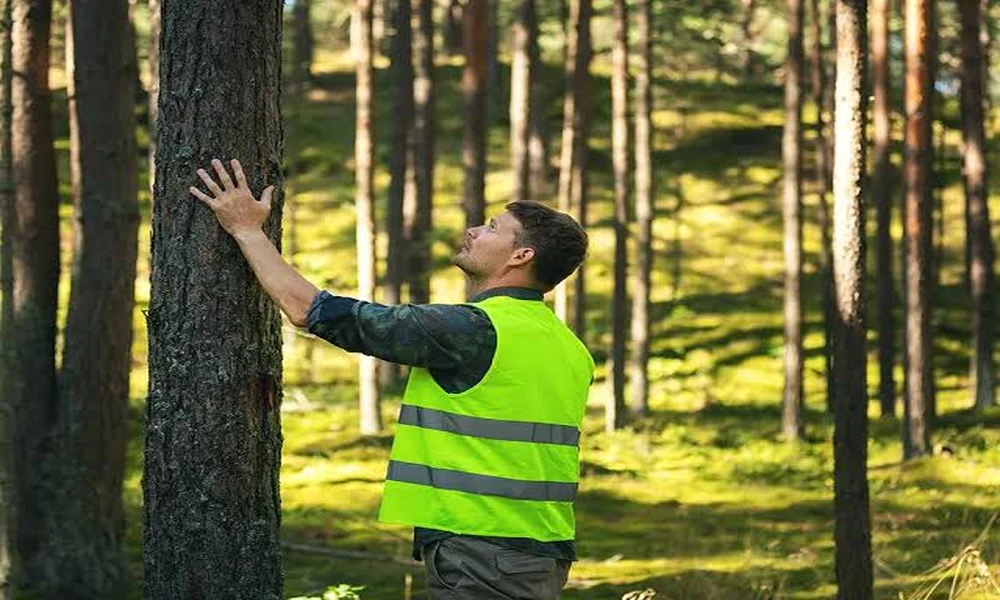
Most people only think about a big tree when something goes wrong with it. A limb comes down on the fence, a trunk cracks after a windstorm, or a neighbor’s oak ends up in somebody’s living room. The signs were usually there for months. Trees don’t announce problems, but they do show them, in the shape of the crown, the condition of the bark, and the soil around the base. You don’t need training to notice many of these signs. You need a method, and a medical checkup is a good one to borrow.
Take the patient history
Start with what has changed. Every checkup begins with questions. Has the tree lost branches in recent storms? Was there construction, trenching, or grading near its roots? Has the yard flooded or dried out? Has the tree started leaning, or has the lean become more noticeable? Did it leaf out late this spring compared with neighboring trees?
Write down what you find and the dates, and take photos from the same spot each season. Changes are easy to miss when you see a tree every day, and a photo record makes them obvious.
Know who the specialist is
A homeowner can spot symptoms, but diagnosis belongs to someone trained in it. The standard credential is ISA Certified Arborist, issued by the International Society of Arboriculture, and it’s different from simply owning a chainsaw and a truck. Companies such as Lester’s Tree Service advertise certified arborists and master climbers on their crews, and that’s the kind of claim you should verify yourself. Ask for the credential number and confirm it with the ISA before you hire anyone to assess or cut a large tree.
Ask for the evaluation in writing, with photos of what the arborist found and a clear recommendation: monitor, prune, support, or remove. A good arborist will explain why, and will tell you when a tree doesn’t need work at all.
Examine the crown
Begin at the top. The University of Florida’s extension service notes in its guide to tree risk assessment that dead branches are usually easy to identify by their lack of bark and leaves, but that you should look over the whole tree, because branches high in the canopy are easy to miss and cause more damage when they fall from a greater height. Broken or hanging branches, it says, are an obvious hazard, since it’s only a matter of time before they fall.
Look for these signs:
Dead limbs, especially large ones, over the house, driveway, or play area. Branches that are broken but still caught in the canopy. A canopy that looks thin or sparse on one side. Bare branches in the middle of the growing season, when the rest of the tree is full of leaves. Remember that deciduous trees drop leaves in autumn, so check at the right time of year.
Examine the trunk
Move down to the trunk. Look for deep cracks and splits, especially where two large stems join, since weak unions can fail in wind. Check for cavities, which can mean decay from an old wound, and for patches of missing or peeling bark. Notice any oozing or sunken areas, and look at how the trunk meets large limbs.
A lean deserves special attention. The UF guide points out that a tree that leans slowly over time is less alarming than one whose lean develops rapidly, but both should be looked at by a certified arborist. A tree that has always grown at an angle may be perfectly stable. A tree that changed its angle after a storm may not be.
Examine the base
The base is where the quietest problems hide. Look at the soil around the trunk for heaving, cracks, or a mound on one side, which can mean roots are pulling loose. Check the root flare, where the trunk widens at the ground, for swelling, cavities, or soft spots. Look for mushrooms and shelf shaped fungus growing on the trunk or at the base. The UF guide lists cavities or swelling at the root collar, fungal conks or mushrooms around the base, and visibly broken root stubs as clues to root trouble.
Mushrooms don’t automatically mean a tree must come down, but they point to decay somewhere inside. Figuring out how much sound wood remains is the arborist’s job.
Reading the results
Not every finding is an emergency. Think of the results in three groups. Minor items, such as a few small dead twigs or old wounds that have closed over, can be watched from season to season. Moderate items, such as large dead limbs, a mild lean, or crowded branches, deserve a professional evaluation soon. Serious items, such as a sudden lean, heaving soil, deep trunk cracks, large hanging branches, or fungus combined with a hollow or soft trunk, call for prompt attention and for keeping people and vehicles away from the tree until it’s assessed.
If a tree is near power lines, don’t go anywhere near it. Call the utility company, because only qualified line workers should work around energized lines.
Treatment options
Depending on the diagnosis, the plan might be pruning to remove dead or weak limbs, thinning to reduce wind resistance, cabling or bracing to support a weak union, improving soil conditions and watering, or removal when the risk is too high to manage. Ask what each option costs, what it would accomplish, and what happens if you wait. A written estimate should describe the work, the cleanup, and who is responsible for any damage.
Be cautious about anyone who recommends topping, which means cutting large branches back to stubs. It weakens trees and invites decay. Be equally careful with door to door offers after a storm.
Discharge instructions
A checkup only helps if you act on it and repeat it. Do a quick look every season and after major storms. Keep your notes and photos. Call a certified arborist when you see something from the serious list, and don’t wait for the forecast to force the decision.
Trees are among the most valuable and long lived things on a property, and they’re also among the heaviest. A few minutes of attention each season, plus a professional opinion when something looks wrong, usually costs far less than the damage a failed tree can cause. Your tree has been telling you how it’s doing for years. The checkup just teaches you to listen.
